

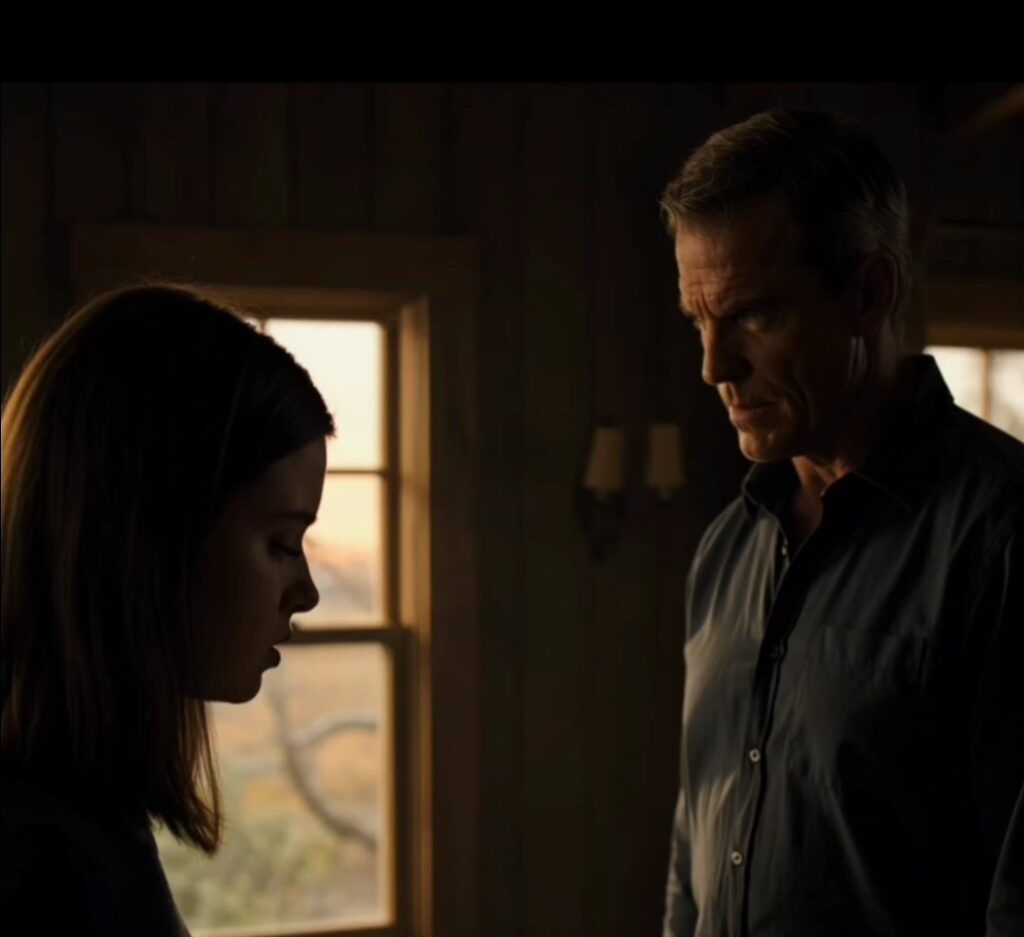
Chapter 1: The Place Everyone Underestimated
“He also told me to tell you this,” Jack said. “Sometimes the most valuable things get hidden in the places proud people are too blind to respect.”
I stood beside the hearth, still holding the photograph of Grandma Rose.
“What does that mean?”
Jack set the casserole on the kitchen counter and looked around the cabin like he was seeing more than walls. “It means your father knew exactly what he was doing.”
I almost laughed. “He left Megan a Miami apartment.”
Jack nodded. “He left Megan what she could understand.”
That sentence silenced me.
Outside, the wind moved through the trees, brushing branches against the windows like fingertips. For the first time since the funeral, I felt my father near—not in some dramatic way, not like a ghost, but like a man who had left instructions in the only language his family could not corrupt.
Jack walked to the mantle and tapped the photograph.
“Rose wasn’t your grandmother by blood,” he said. “She raised your father after his parents died. Took him in when nobody else wanted another mouth to feed. This cabin belonged to her.”
“My father never told us.”
“He tried once,” Jack said. “Your mother didn’t care for stories that didn’t come with status.”
The words stung because they were true.
In our family, anything humble was treated like shame. Old furniture, simple clothes, rural land, military service—unless it could be polished into a speech, it was something to hide.
“And the land?” I asked.
Jack’s eyes shifted toward the dark windows.
“Two hundred acres, yes. But not just trees.”
Chapter 2: What the Woods Were Hiding
The next morning, Jack came back with a thermos of coffee and a folder wrapped in plastic.
We sat at the kitchen table while sunlight poured through the windows and turned the dust in the air into gold.
“Your father wanted you to have this after you spent one night here,” Jack said. “Not before.”
“Why?”
“Because he wanted you to see the place before anyone told you what it was worth.”
My fingers tightened around the mug.
Jack opened the folder.
There were maps. Survey reports. mineral assessments. Timber valuations. An old letter from the state conservation office. Then another document with my father’s signature.
I read the numbers twice because my mind refused to accept them the first time.
Selective timber rights alone were worth more than Megan’s apartment.
The western ridge had a spring-fed water source licensed for potential bottling or conservation use.
And the real shock sat in the final document: a private development group had offered my father nearly fourteen million dollars for the land three years earlier.
He had refused.
My breath left me.
Fourteen million dollars.
For the “shack in the woods.”
Jack watched me carefully. “Your father didn’t sell because Rose made him promise the land would stay with someone who understood duty more than display.”
I looked down at my uniform jacket folded over the chair.
Duty.
That word had cost me birthdays, holidays, relationships, comfort, sleep, and sometimes peace. Megan called it “playing soldier.” My mother called it “running away.”
But my father had seen it differently.
My throat tightened.
“He knew,” I whispered.
Jack nodded. “He knew.”
Chapter 3: The Calls From Miami
By noon, my phone started again.
Megan.
Mom.
Megan.
Mom.
Then Robert Chen, the lawyer.
I answered Robert first.
His voice was calm. “Sarah, I received a call from your sister this morning.”
“Of course you did.”
“She is asking whether the estate distribution can be challenged.”
I stared out at the trees.
“On what grounds?”
“She believes your father may not have understood the value of the Adirondack property.”
I laughed, but there was no humor in it.
“She didn’t care about the value yesterday.”
“No,” Robert said. “But she appears to care now.”
That meant she had found out.
Maybe through a local real estate contact. Maybe through Mom. Maybe because proud people always mock first and investigate later.
“Can she challenge it?” I asked.
“She can try,” Robert said. “But your father was very deliberate. He updated the will six months ago. He had medical capacity letters. Video confirmation. Witnesses. He also left a sealed statement explaining why each asset went where it went.”
My heart stopped.
“What statement?”
“I was instructed to send it after you stayed at the cabin overnight.”
I looked across the table at Jack.
My father had planned everything.
Not cruelly.
Carefully.
Chapter 4: My Father’s Final Truth
The email arrived an hour later.
A video file.
I sat alone in the cabin and pressed play.
My father appeared on the screen thinner than I remembered, sitting in Robert’s office with tired eyes and steady hands.
“Sarah,” he began, “if you’re watching this, then you went to the cabin.”
I covered my mouth.
He smiled faintly.
“Good. That means you still listen to the quiet voice inside you, even when everyone else tries to drown it out.”
My tears came fast then, but I didn’t pause the video.
“I know you think I didn’t defend you enough. You’re right. I should have. Your mother favored comfort. Megan favored attention. And I let peace become an excuse for cowardice.”
The truth hit like cold water.
“But I saw you, Sarah. I saw the girl who carried more than she complained. I saw the woman who served without needing applause. I saw how they called your strength distance because it made them feel abandoned.”
He leaned closer.
“Megan wanted Miami because Miami shines. So I gave her shine. You deserved roots. So I gave you the place that made me.”
Then he told me about Rose.
How she had taken him in.
How she taught him that land was not just property, but responsibility.
How the cabin had saved him from becoming bitter.
How he believed it might save me too.
“I am not leaving you a consolation prize,” he said. “I am leaving you the inheritance I trusted only you not to waste.”
By the end, I was crying so hard I could barely see the screen.
His final words stayed with me.
“Do not let people who measure everything in luxury convince you that legacy is worthless.”
Chapter 5: When Megan Arrived
Megan came the next afternoon in white boots and a rented SUV that looked terrified of mud.
Mom was with her.
They didn’t knock.
Megan stepped onto the porch like she owned it already.
“Well,” she said, looking past me into the cabin. “Seems Dad hid a few things.”
I stood in the doorway.
“Funny. Yesterday it was a shack.”
Her face flushed.
Mom touched my arm. “Sarah, let’s not make this ugly.”
I looked at her hand until she removed it.
“It became ugly when you let her call me filthy at Dad’s table and said nothing.”
Mom’s eyes filled, but I no longer trusted tears that arrived only when consequences did.
Megan lifted her chin. “This division was unfair.”
“No,” I said. “It was just the first time Dad didn’t reward your appetite.”
Her mouth opened.
I continued.
“You got the apartment. Keep it. Enjoy it. Sell it. Decorate it with mirrors so you can keep admiring yourself. But this land is mine.”
Mom whispered, “You’re being harsh.”
“No,” I said. “I’m being clear. There’s a difference.”
Megan’s voice dropped. “I’ll fight you.”
I smiled.
“Then bring better weapons than insults.”
Epilogue: Roots
She did try.
For three months, there were legal threats, family messages, dramatic calls, and relatives suddenly concerned about “fairness.”
But Robert Chen had been right.
My father had built the will like a fortress.
Megan kept the Miami apartment.
I kept the cabin, the land, the spring, the timber, and the truth.
But I didn’t sell.
Not to the developers. Not to the investors. Not even when the offers climbed high enough to make my hands shake.
Instead, I worked with a conservation trust, leased limited timber responsibly, repaired the cabin, and turned part of the property into a retreat for veterans learning how to live with silence again.
Jack helped.
So did men and women who understood that some wounds don’t need noise. They need space, work, firelight, and the mercy of being useful again.
One year later, I stood on the porch at sunrise, coffee in hand, watching mist lift from the trees.
The cabin no longer looked like a punishment.
It looked like an answer.
My sister had inherited an apartment.
I had inherited a story.
A root.
A responsibility.
And maybe that was the final mercy my father gave me: he let Megan’s mockery push me toward the very place where I would discover my worth had never depended on the people laughing at the table.
Some blessings arrive dressed like rejection.
Some treasures are hidden where arrogance refuses to look.
And sometimes God lets people insult your inheritance only because they cannot see the kingdom buried beneath it.
